
Prioritize Safety First: Always begin your search by looking for Verified Clinics and Board-Certified Surgeons, preferably within JCI-Accredited facilities. This is your primary guarantee of quality and safety.
Understand Pricing: Lower costs in Turkey are due to economic factors like lower labor costs and government incentives for medical tourism, not a compromise on quality.
Look for All-Inclusive Packages: Reputable clinics offer All-Inclusive packages that simplify your journey by including your procedure, 5-star hotel stays, and VIP transfers.
Verify Credentials: Independently verify a surgeon's certifications and a clinic's accreditation with bodies like the Turkish Ministry of Health or JCI. Never take marketing claims at face value.
Insist on a Consultation: Demand a direct video call with your surgeon to discuss your candidacy, risks, and realistic outcomes. Avoid any provider who guarantees results.
When you start searching for an "optical near me" ahead of a trip to Turkey, you're likely thinking about more than just a new pair of glasses. You're exploring the possibility of world-class eye care—from advanced laser surgery to designer frames—at prices that are hard to ignore.
Turkey has rightfully earned a reputation for excellence and affordability in this field. But getting it right, and ensuring your safety, all comes down to how you begin your search.
Starting Your Search for Eye Care in Turkey
Let's be clear about one thing: while the attractive prices are a huge draw, they should never be the main reason you choose a clinic. Your first and most important job is to focus on safety and credentials.
Think of it as building a strong foundation. The absolute must-haves are Verified Clinics and Board-Certified Surgeons, ideally working within JCI-Accredited Hospitals. These aren't just fancy titles; they are your proof of quality and your best guarantee of safety. Filtering your search based on these criteria from the get-go is the single most important action you can take.
This shifts your goal from finding the closest or cheapest option to finding the safest and most qualified one.
Building a Foundation of Trust
Before you even glance at treatment packages or price lists, your first task should be creating a shortlist of credible professionals. Starting with a platform that has already vetted its listings can save you a ton of time and give you immediate peace of mind.
Adopting this safety-first mindset offers some real, practical benefits:
Minimises Risk: You immediately weed out unqualified practitioners and subpar facilities, which is the biggest danger in medical tourism.
Guarantees High Standards: JCI-Accredited Hospitals operate under strict international protocols for hygiene, patient care, and safety—the same standards you'd expect in the UK, EU, or USA.
Ensures Professional Accountability: A Board-Certified Surgeon has undergone years of rigorous training and is held to the highest ethical and professional standards.
When you start with this framework, you can explore your options with genuine confidence. For example, you can easily search for verified doctors and directly compare their qualifications and accreditations. This approach turns what could be an overwhelming search into a structured and secure process, setting you up for a successful and stress-free experience.
Understanding Turkey's High-Quality, Affordable Eye Care
It’s a fair question: how can Turkey offer world-class optical services at prices that seem too good to be true? Many people I speak to are initially sceptical, but the answer has nothing to do with cutting corners on quality or safety. It’s all about economics.
The reason you can find a top-notch "optical near me" in Turkey for a fraction of the cost back home comes down to the country’s economic structure. Factors like lower operational and labor costs, a beneficial currency exchange rate, and government incentives all create significant savings. Thankfully, those savings are passed directly on to you, the patient.
On top of that, the Turkish government actively supports its medical tourism industry. They provide incentives for clinics that achieve and maintain high international standards, which creates a healthy, competitive market where excellence and affordability go hand-in-hand.
The Myth of Price Versus Quality
Let’s be honest, a low price can sometimes feel like a red flag. But when it comes to Turkey's regulated medical sector, that's a complete misconception. The Turkish Ministry of Health maintains incredibly strict oversight. This ensures that clinics, particularly Verified Clinics, follow protocols that are often identical to what you’d find in the UK, Germany, or the USA.
When you're doing your research, these are the non-negotiables.
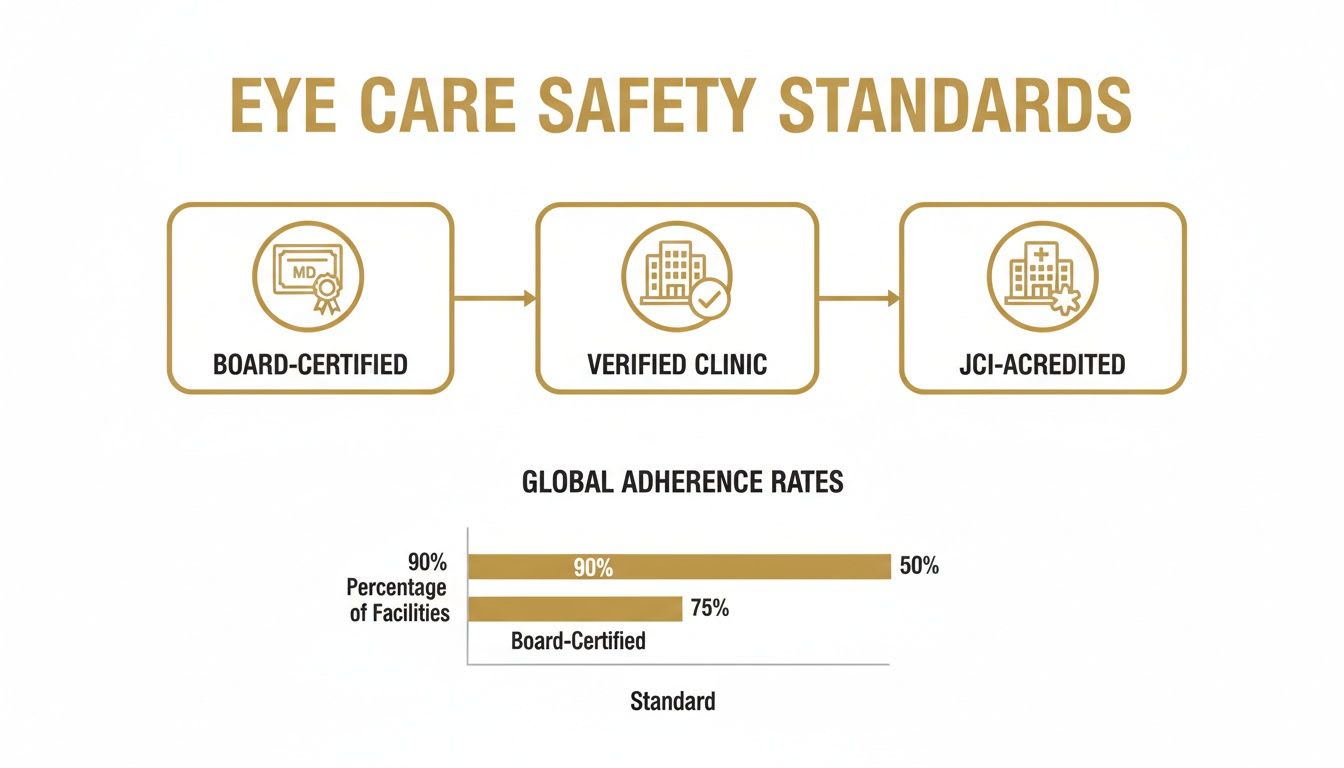
These symbols for Board-Certified surgeons, Verified Clinic status, and JCI-Accreditation are the three pillars of patient safety. Think of them as your essential quality checklist.
This boom in medical travel to Turkey is no accident. The optical care field, especially in hubs like Istanbul, has grown massively. In fact, Ministry of Health data from 2023 showed over 1.2 million international patients travelled to Turkey for various procedures. A significant 15% of them chose verified clinics in the country’s 'TR' region for treatments like LASIK, saving up to 70% compared to Western prices while still receiving care in JCI-accredited hospitals. If you’re interested in the history of the field, the exhibits at OpticalHeritageMuseum.com are fascinating.
Realistic Cost Expectations
So, what kind of savings are we really talking about? While every procedure and clinic is different, the cost difference is substantial. This table gives you a general idea of the value Turkey offers.
Cost Comparison for Optical Services Turkey vs Other Countries
| Service / Product | Average Cost in Turkey (€) | Average Cost in UK/USA (€) |
|---|---|---|
| LASIK (both eyes) | €1,500 – €2,500 | €4,000 – €6,000 |
| Cataract Surgery (per eye) | €1,200 – €2,000 | €3,500 – €5,000 |
| Designer Frames & Lenses | €200 – €400 | €500 – €800 |
These aren't just small discounts; they represent genuine, life-changing savings that put premium treatments within reach for many people.
A LASIK procedure that could set you back €4,000-€6,000 in Western Europe can often be done for €1,500-€2,500 in a leading Turkish clinic. For high-end designer glasses with advanced lenses, you're looking at savings of 50-60%.
This financial breathing room makes a huge difference. It allows patients to afford procedures they might have put off for years. For some, it even opens up the possibility of combining their eye care with other cosmetic treatments during the same trip. You can see what's available by exploring our comprehensive guide to available treatments.
When you pair these cost advantages with the guarantee of being treated by a Board-Certified Surgeon in a verified facility, it's clear why Turkey’s reputation as a trusted eye care destination is so well-deserved. You really can set aside the old myth that lower cost must mean lower quality.
How to Verify Surgeon and Clinic Credentials
When you’re looking at getting eye surgery in Turkey, let's be frank: you’re putting your eyesight in someone else’s hands. Slick websites and polished marketing materials are one thing, but the only thing that truly counts is the verifiable credentials of your surgeon and the clinic.
This isn’t just a box-ticking exercise; it’s the most critical safety check you’ll perform. I’ve seen enough to know that taking marketing claims at face value is a risk not worth taking. Here’s how you can cut through the noise and confirm you’re in safe, expert hands.
First, Vet Your Surgeon
The surgeon’s qualifications are your first and most important checkpoint. In Turkey, the gold standard you're looking for is a Board-Certified ophthalmologist.
This isn’t just a fancy title. It means the surgeon has gone through years of specialised training and passed demanding exams focused specifically on eye surgery. A reputable clinic will be completely open about this, so don't be shy.
When you contact a clinic, ask them directly for the surgeon's credentials. Here’s a checklist of what to look for:
Turkish Ophthalmological Association (TOD): Is the surgeon a member? Membership in the main professional body for eye doctors in Turkey is a strong sign of their professional standing.
Specialisation Certificates: A Board-Certified Surgeon will have diplomas from a recognised university detailing their specialisation. Ask to see them. Any hesitation from the clinic is a red flag.
International Memberships: Many of Turkey's top surgeons are also active in global organisations like the European Society of Cataract and Refractive Surgeons (ESCRS). This shows they’re committed to staying on top of international standards and techniques.
My best piece of advice? Insist on a video consultation directly with the surgeon who will be performing your procedure. This is your chance to ask questions, sure, but more importantly, it's how you get a real feel for their professionalism and how well they communicate. It's an invaluable way to build genuine trust before you ever get on a plane.
Next, Scrutinise the Clinic's Accreditation
Once you’ve got a good feeling about the surgeon, it's time to look at the facility itself. A great surgeon needs a great facility to work in. For your safety, you should only consider a clinic that operates within a JCI-Accredited Hospital.
Joint Commission International (JCI) is a US-based organisation, but it’s recognised globally as the benchmark for quality and patient safety. For a hospital to earn JCI-Accreditation, it has to pass an incredibly tough evaluation covering everything from hygiene and infection control to patient care protocols and how the facility is managed. They don't just hand these out.
This is particularly important in a market as bustling as Turkey's. With over 25,000 opticians and eyewear stores across the country—8,000 of them in Istanbul alone—the choice can be overwhelming. You can read more on these figures from the Optisyenler ve Gözlükçüler Odası. This density of choice is great, but it also means you have to be discerning. Looking for that JCI-Accreditation is how you separate the best from the rest.
Don’t just take a clinic’s word for it—verify everything. Your vision is too important. By doing this homework on both the surgeon and the facility, you can move forward with real confidence. A great place to start is to Search for verified doctors and cross-reference their credentials on our platform.
Preparing for Your Consultation
This is it. The consultation is the single most important conversation you’ll have on this entire journey. Think of it less as a sales pitch and more as a crucial medical assessment where your safety and the final outcome are decided. This is the moment you stop searching for an "optical near me" and start vetting a real medical professional who will hold your vision in their hands.
Your job here is to be an open book. That means laying out your full medical history—every chronic condition, every medication, every past eye problem. A Board-Certified Surgeon depends on this honesty to keep you safe. Something that seems minor to you could be a critical piece of the puzzle for them when deciding if a procedure is right for you.
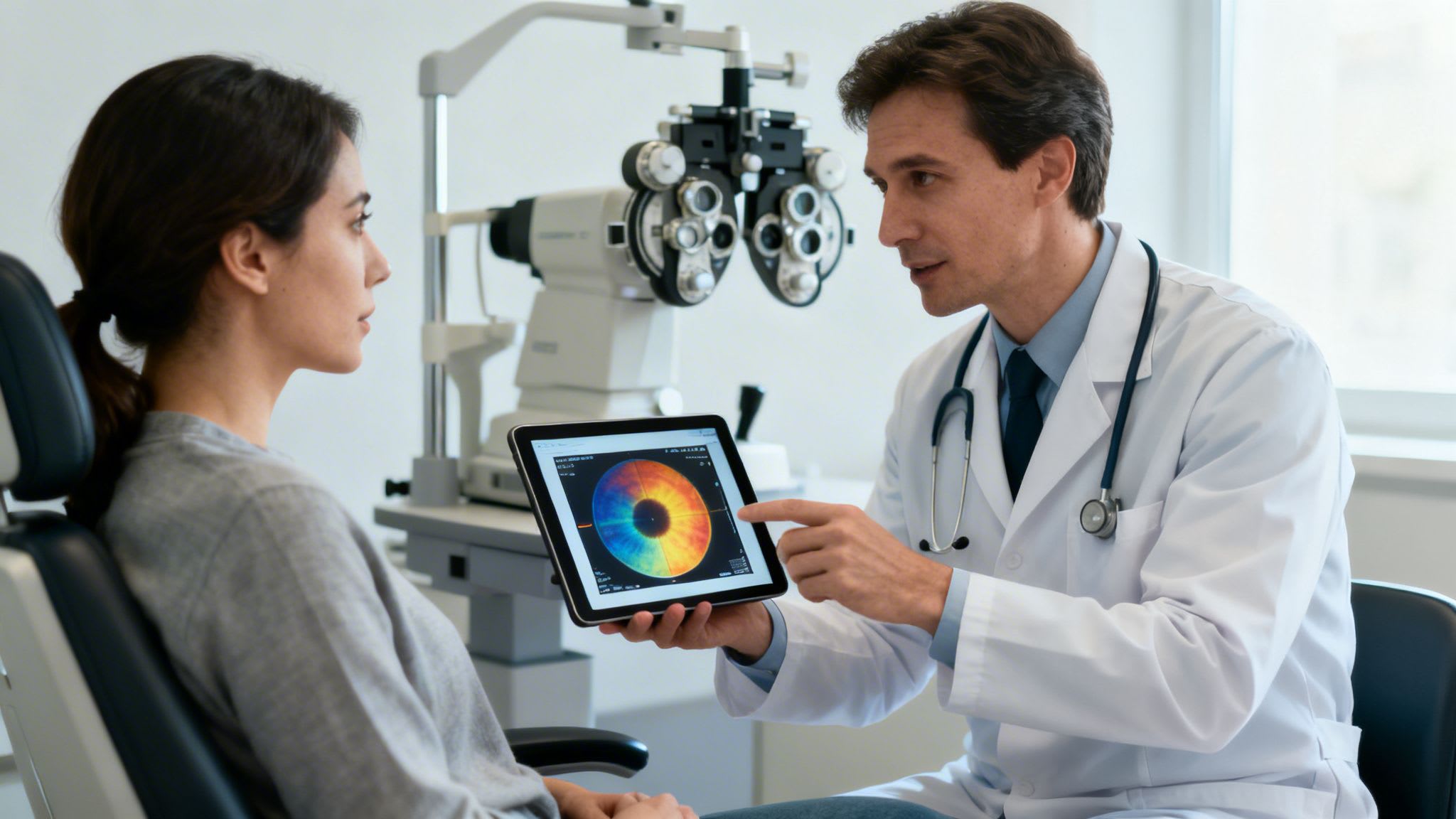
Who Is a Good Candidate for Surgery?
Getting a procedure like LASIK isn't just about wanting it; it's about meeting very specific physiological benchmarks. Your surgeon will be looking for a few key things to make sure you're a good fit.
Stable Vision: Your prescription for glasses or contacts shouldn't have changed for at least one to two years. Your eyes need to have settled.
Corneal Thickness: The procedure literally reshapes your cornea, so you need to have enough tissue to work with safely. This is non-negotiable.
Good Overall Eye Health: Any underlying conditions like severe dry eye, glaucoma, or cataracts need to be addressed or will likely rule you out.
General Health: Some autoimmune diseases or medications can interfere with healing, which could make you a less-than-ideal candidate.
On the other hand, you may not be a candidate if you're pregnant or breastfeeding, if your prescription is still changing, or if you have a condition like keratoconus. A responsible surgeon will have no problem telling you "no" if the procedure isn't in your best interest.
A massive red flag you should never ignore is the promise of "guaranteed results." Medicine simply doesn't work that way; everyone’s body is different. A surgeon you can trust will talk about likely outcomes, the possibility of needing a future touch-up, and be completely transparent about side effects like temporary dry eyes or night-time halos.
Critical Questions to Ask Your Surgeon
This consultation is your interview. You are hiring this person for an incredibly important job, so don't be shy. A confident, experienced surgeon will expect and welcome your questions.
Have these ready to go:
How many procedures of this exact type have you performed?
What specific technology and equipment will you use for my surgery?
Looking at my scans, what is the most realistic outcome I can personally expect?
For a patient with my eyes and health profile, what are the most common risks?
What is your process if I have a complication after I return home?
The goal is to walk out of that room feeling informed, respected, and confident in the plan. If you feel rushed, dismissed, or pressured in any way, that’s your cue to walk away and find someone else.
Doing your homework before this meeting ensures you can have a meaningful, honest dialogue with your potential surgeon. This builds the trust that is the bedrock of any good medical partnership. Before you sign any papers, Search for verified doctors and seriously consider booking a second consultation to compare professional opinions.
Evaluating All-Inclusive Packages and Aftercare
If you're looking for optical treatment in Turkey, you’ve almost certainly come across clinics advertising All-Inclusive Packages. These deals are a staple of the medical tourism industry here, and for good reason—they’re designed to take all the logistical stress off your shoulders.
But not all packages are created equal. From my experience, the best ones are more than just a convenience; they’re a clear signal that a clinic is well-versed in handling the needs of international patients. Let’s break down what you should expect to see inside and, just as importantly, what might be left out.

What Is Typically Included
A well-structured All-Inclusive package from a Verified Clinic bundles the core logistics of your trip into a single price. This lets you put your energy where it belongs: on your procedure and recovery.
While the specifics can differ slightly from one clinic to another, a high-quality package will almost always cover:
The Medical Procedure: This is the big one—the full cost of your surgery or treatment.
Accommodations: Your stay in a comfortable 5-star hotel, usually hand-picked for its quality and closeness to the clinic.
VIP Transfers: Forget navigating a new city. This means private transport waiting for you at the airport, taking you to the hotel, and getting you to every single medical appointment.
Translator Services: You’ll have a dedicated person to bridge any language gaps, ensuring you can communicate perfectly with your entire medical team.
Having these details handled for you removes a massive amount of planning and uncertainty.
Understanding Potential Extra Costs
Here’s a piece of advice: a trustworthy clinic is always upfront about what isn't included. While packages cover the big-ticket items, a few expenses are almost always handled separately. It's smart to budget for these from the start to avoid any unwelcome surprises.
Be prepared for potential extra costs like:
Prescription Medications: Post-operative eye drops or any pain relief will need to be purchased from a local pharmacy.
Extended Stays: If you decide to extend your holiday or if your surgeon recommends an extra day or two for observation, those additional hotel nights will be your responsibility.
Specialty Lenses or Frames: Thinking of buying some new high-end glasses while you're there? This would be a separate purchase.
The good news is that Turkey's optical market is incredibly well-developed. According to the Turkish Statistical Institute, eyewear use is on the rise, with Istanbul alone selling over 4 million pairs of glasses each year. This robust infrastructure means international patients have fantastic access to specialty lenses and expert care from verified clinics. You can find more on the industry's background over at OpticianNow.com.
The Critical Role of Aftercare
Your treatment journey doesn't end the moment you walk out of the clinic. In fact, what happens next is crucial for protecting your vision and the investment you've made.
A top-tier clinic will never leave you in the dark. They should provide a detailed recovery timeline and crystal-clear instructions for your immediate post-operative period.
You also need a solid plan for follow-up care. This could mean a final check-up in Turkey before you fly home, or it might involve co-ordinating care with your own optician back home. Make sure you discuss this entire aftercare strategy with your surgeon before you commit to the procedure.
Think of it as a partnership. By getting a complete picture of your package and aftercare plan, you can proceed with real confidence. A great first step is to see exactly what's on the table when you Check VIP Packages with our network of verified providers.
Your Top Questions About Optical Care in Turkey Answered
When you're considering medical care abroad, it's completely natural to have a list of questions. I've spent years guiding international patients through their journey to finding top-tier optical care in Turkey, and the same crucial concerns come up time and again.
Let's walk through them. These aren't just minor details—getting clear, upfront answers is fundamental to ensuring your experience is both safe and successful.
How Can I Be Sure the Surgeon Speaks English?
This is often the first and most important question I hear. Feeling understood is non-negotiable.
The most direct way to settle this is to insist on a video consultation with the actual Board-Certified Surgeon who would perform your procedure. This isn't just about fluency; it's about rapport and your comfort level. You'll know right away if you can communicate effectively.
Beyond that, any truly professional clinic, especially a JCI-Accredited Hospital, knows that clear communication is paramount. They build professional medical translation services right into their All-Inclusive Packages, so there’s an expert in the room to ensure nothing gets lost in translation.
What If I Have a Problem After I Return Home?
An excellent and necessary question. A clinic's commitment to you shouldn't end the moment you leave the country. A solid plan for remote aftercare is a sign you're dealing with a responsible provider.
Before you book anything, ask them to walk you through their exact protocol for post-operative complications. A high-quality Verified Clinic will have this down to a science. They should provide detailed written instructions, have a system for scheduled video follow-ups, and be prepared to help coordinate with an ophthalmologist in your home country if needed. On that note, giving your local eye doctor a heads-up about your plans is always a smart move.
Is It Safe to Get Prescription Glasses on a Short Trip?
Yes, absolutely. In fact, it's remarkably efficient, as long as you go to the right place. Major hubs like Istanbul and Ankara have some of the most advanced optical labs in the region. They can often turn around high-quality glasses, even with complex multi-focal lenses, within 24 to 48 hours.
The key to safety here is sticking with opticians who are either part of a Verified Clinic or belong to a major, well-regarded optical chain. I cannot stress this enough: avoid the temptation of street-side vendors or small, unvetted shops. The risk of getting an incorrect prescription or lenses made from substandard materials is just too high.
Are Hygiene Standards the Same as in the UK or EU?
When you choose a clinic with the proper international credentials, the answer is a firm yes. The standards for hygiene, sterilisation, and patient safety in a JCI-Accredited Hospital or a top-tier Verified Clinic are identical to those you'd find in London, Berlin, or New York.
These facilities don't just claim to have high standards; they have to prove it. They face rigorous, regular audits to keep their international accreditations and must comply with the strict regulations of the Turkish Ministry of Health. This is precisely why we put so much emphasis on verifying credentials. Your safety is directly linked to the standards a clinic is held accountable for.
If you'd like more personal guidance on verifying a clinic or what to ask, you can always get in touch with our team for personalised advice. This disciplined approach to choosing a clinic removes the guesswork and ensures your search leads you to a world-class experience.
At Turkey Beauty Guide*, our mission is to empower you with the knowledge to make safe, informed decisions.
Search for verified doctors or check VIP Packages on Turkey Beauty Guide.
Explore More
This article is for informational purposes only and does not replace professional medical advice.